How fast they are growing
Both are running ahead of plan this year. Singapore on an AI boom, Ho Chi Minh City on investment.
Singapore
6.1%growth, first half of 2026
Up from 5.0% in 2025. The 2026 forecast has been raised twice, now to 4.5 to 5.5%.
- What’s driving it: global spending on AI hardware.
- Treat it as a tailwind, not a planning baseline: the pace rides on one investment cycle.
Vietnam
8.55%Ho Chi Minh City, first half of 2026
Ahead of Vietnam’s 8.18%, after national growth of 8.02% in 2025.
- Weight: nearly a quarter of national output and over a third of state revenue.
- Money coming in: US$7.5bn of foreign investment, up nearly 90%.
- But: only 19th of 34 provinces on growth.
What each economy produces per person
Singapore's output per person is more than 11x Ho Chi Minh City's, and the city's is 1.7 times Vietnam's.
- SingaporeUS$99,370 S$129,194
- Ho Chi Minh CityUS$8,755
- VietnamUS$5,026
Prices and jobs
Inflation is climbing in both, faster in Vietnam. Labour is tight in Singapore and cheap but thinly skilled in Vietnam.
- Inflation
- Singapore: 2.2%July 2026, highest in about two years; core 2.0%
- Vietnam: 4.89%August 2026, up from 3.31% for 2025
- Unemployment
- Singapore: 1.9%1.48 vacancies per jobseeker, June 2026
- Vietnam: 2.22%2.47% in cities, first half of 2026
- The catch
- Singapore: 4,620Layoffs in Q2 2026, the most since late 2020
- Vietnam: 29.7%Share of workers with formal qualifications
What that does to your costs
Budget for rising costs in both, but the levers are different.
Singapore
- Prices: MAS expects 1.5 to 2.5% inflation this year and is letting the dollar rise faster.
- Currency: a firmer dollar makes local payroll and leases dearer in US-dollar terms. Consider hedging them.
- Hiring: layoffs in manufacturing, infocomm and finance free up experienced people for regional roles.
Vietnam
- Prices: inflation has averaged 4.45% so far this year. Put cost-escalation clauses in supplier and lease contracts.
- Pay: average income is about US$340 a month, still a clear cost advantage.
- Skills: with under a third of workers formally qualified, skilled talent costs more than averages suggest.
The public finances
Singapore runs surpluses and owns more than it owes. Vietnam borrows moderately to build.
Singapore
1.0%of GDP budget surplus, FY2026
S$8.5bn, after 1.9% in FY2025.
- Debt looks high, isn’t: about 99% is raised for non-spending purposes, and the government has more assets than debts.
- Watch: the Pillar Two top-up tax lifts large multinationals to a 15% effective rate from FY2027. Model it now.
Vietnam
~36%of GDP public debt
With a 2025 deficit near 3.6% of GDP.
- Room to build: moderate debt leaves space for projects such as a US$67bn high-speed railway from Hanoi.
Credit ratings
The top of the scale against one step below investment grade, with an upgrade in sight.
Sovereign credit rating (S&P scale)
Singapore: AAAS&P, Moody's and Fitch
Vietnam: BB+S&P and Fitch; Moody's Ba2, outlook positive
- AAA
- AA+
- AA
- AA-
- A+
- A
- A-
- BBB+
- BBB
- BBB-
- BB+
- BB
- BB-
The long run
Singapore is settling into maturity. Vietnam is aiming high, and forecasters expect less than the targets.
Singapore
2 to 3%a year, next decade
The government’s own long-run growth estimate.
- Modest by regional standards. Plan around it.
- Use Singapore for control, stability and access to the region; look to faster neighbours for volume.
Vietnam
10.2%Ho Chi Minh City target, 2026
With output per person of US$9,800. That needs nearly 12% growth in the second half.
- Milestone: upper-middle income as of July 2026, aiming for high income by 2045.
- Reality check: AMRO expects 7.4% national growth for 2026.
What it means for a company
Singapore
Stability, not rapid growth: the natural base for regional headquarters, treasury and financing.
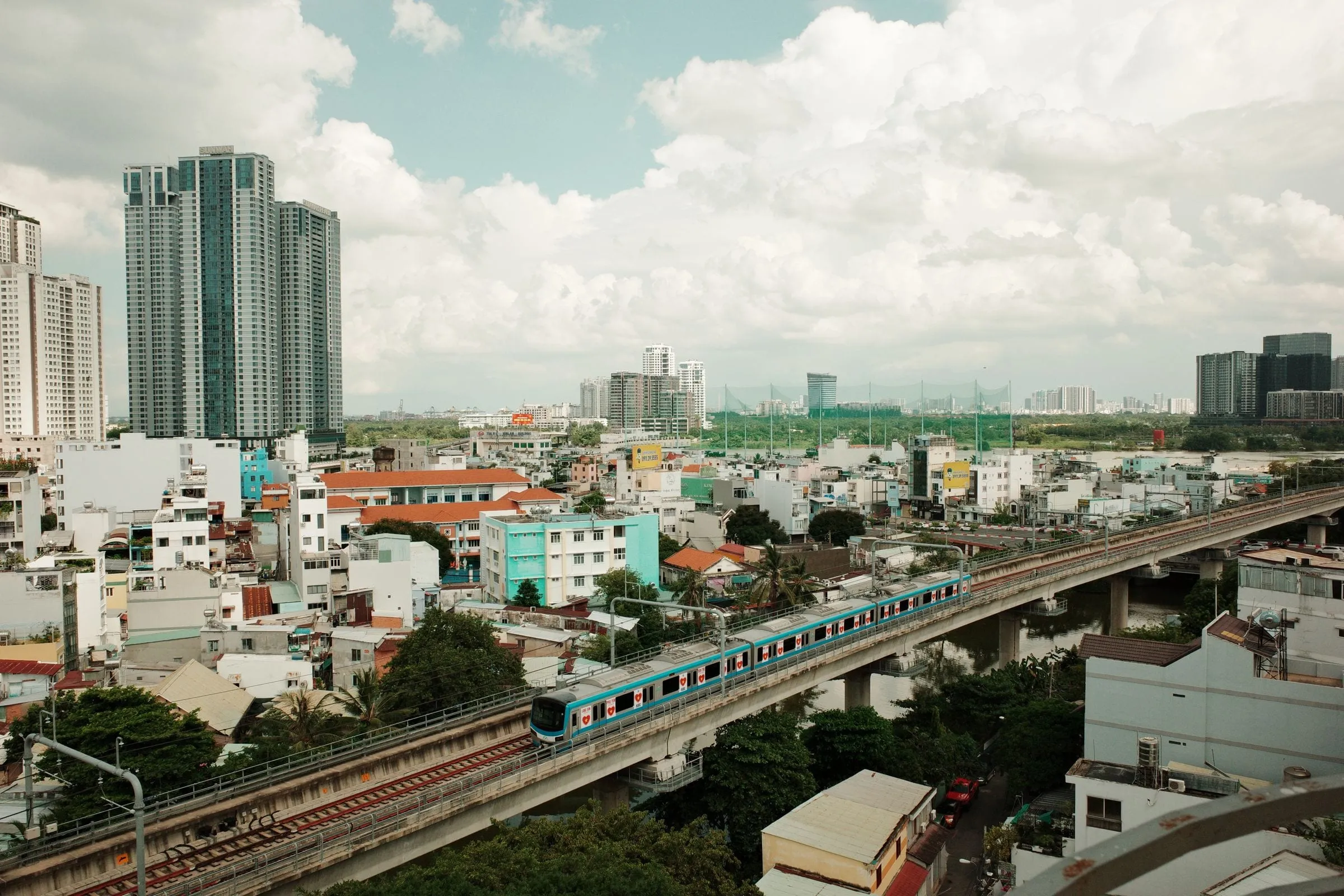
Ho Chi Minh City
Vietnam’s largest urban market, drawing heavy foreign investment.